
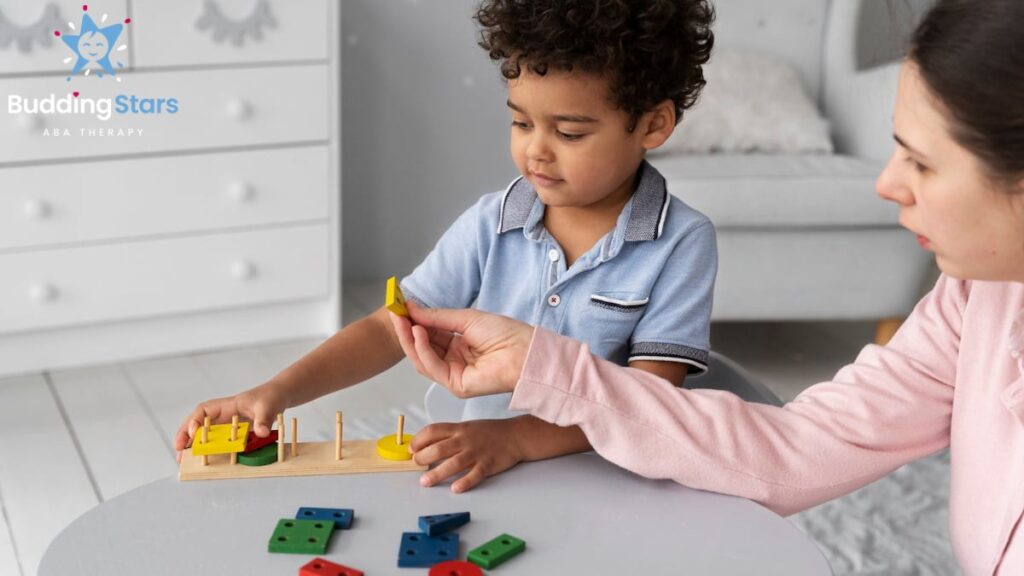
Key points:
- How ABA therapy builds everyday social skills children can use at home, school, and in the community through consistent, supportive practice.
- Practical ways families can support communication, play, and friendships using simple routines and structured guidance.
- How collaboration between home and school strengthens social learning and helps skills generalize across real-life settings.
For many families, helping a child develop meaningful social connections can feel overwhelming, especially when social interactions do not come naturally. Children with autism often need explicit guidance to understand social rules, interpret cues, and respond appropriately in everyday situations. This is where Applied Behavior Analysis, or ABA, becomes especially valuable. ABA focuses on teaching skills step by step, using repetition, positive reinforcement, and real-life practice. When used consistently across home and school, it can support lasting social growth.
This article explores how social skills can be taught through ABA therapy in ways that fit naturally into family life and classroom routines. It is written for parents and caregivers who want practical, realistic guidance they can use every day. You will learn how social learning works, why consistency matters, and how everyday moments like playtime, meals, and group activities can become opportunities for connection and confidence building.
Understanding Social Skill Challenges in Autism
Social development looks different for every child, but many children with autism experience similar challenges. These may include difficulty making eye contact, understanding facial expressions, taking turns in conversation, or joining group play. Research from educational and public health institutions shows that early social challenges can affect long-term independence, emotional wellbeing, and academic participation.
Social skills are not just about being friendly. They involve a complex set of abilities such as recognizing emotions, responding to others, and adjusting behavior based on context. For children on the autism spectrum, these skills often need to be taught directly rather than absorbed naturally. Social development in children with Autism are supported through structured teachings that help break down these complex behaviors into manageable steps that children can practice and master over time.
Families may notice that a child can perform a skill in one setting but not another. This is because social behavior is highly context dependent. A child might greet a parent easily at home but struggle to greet a peer at school. Understanding this challenge is the first step toward effective support.
How ABA Therapy Supports Social Learning
ABA therapy is grounded in decades of behavioral science and is widely recognized by educational and health organizations for its effectiveness. At its core, ABA focuses on understanding why behaviors occur and how learning happens. Social skills are taught using clear goals, structured practice, and positive reinforcement.
Rather than assuming a child understands social expectations, ABA teaches them explicitly. For example, making a friend is broken down into smaller skills such as approaching a peer, using a greeting, asking to play, and responding to answers. Each step is practiced repeatedly until it becomes more natural.
A key advantage of ABA is its flexibility. Programs can be tailored to a child’s age, interests, and daily routines. For families seeking social skills autism therapy, this individualized approach ensures that learning feels relevant and achievable rather than overwhelming.
ABA also emphasizes data and observation. Progress is tracked carefully so strategies can be adjusted if a child is struggling or ready to move forward. This helps families feel confident that time and effort are leading to meaningful outcomes.
Teaching Social Skills at Home Through Daily Routines
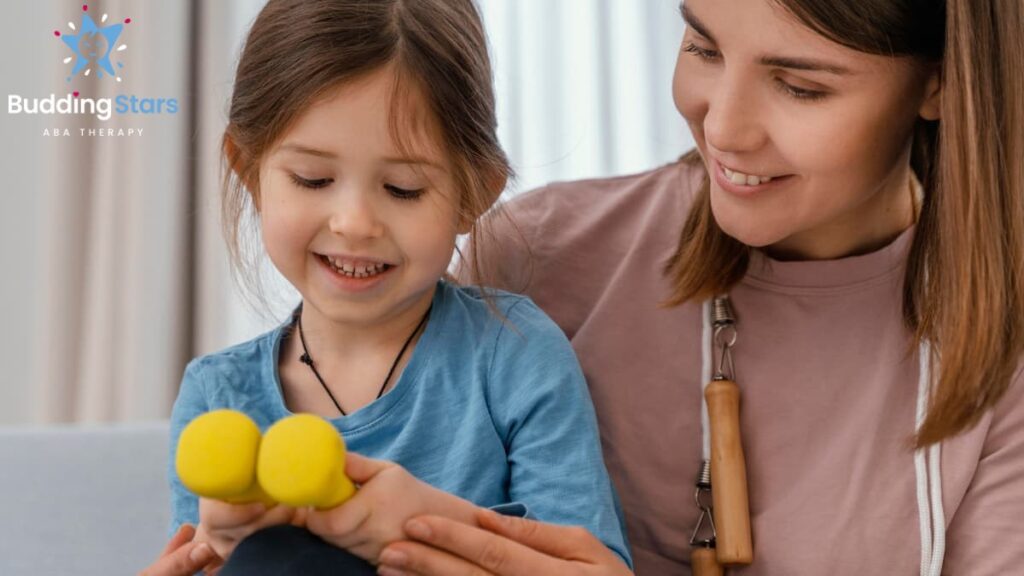
Home is often the safest and most comfortable place for a child to learn new skills. Everyday routines provide countless opportunities to practice social behaviors in a low pressure environment. Simple activities like meals, chores, and playtime can become powerful teaching moments.
Parents can support social learning at home by focusing on consistency and clarity. Clear expectations help children understand what is expected of them, while repetition helps skills stick. For example, practicing greetings with family members every morning builds familiarity and confidence.
Helpful strategies include:
- Modeling appropriate social behavior during everyday interactions.
- Practicing short conversations during meals or car rides.
- Using praise or small rewards when a child attempts a social skill.
- Creating predictable routines that include social expectations.
Playtime is especially important. Through play skills therapy, children learn turn taking, sharing, and imaginative interaction. Structured play activities guided by an adult can gradually become more flexible as a child gains confidence.
Supporting Social Skills in the School Environment
School presents unique social challenges. Classrooms are busy, expectations change quickly, and peer interactions are less predictable. For many children with autism, these factors make social engagement more difficult. ABA strategies can help bridge this gap by teaching skills that apply directly to the school day.
In school settings, ABA often focuses on group participation, classroom communication, and playground interactions. Skills such as raising a hand, waiting for a turn, or asking for help are taught using visual support, role playing, and consistent positive feedback.
Collaboration between families and educators is critical. When home and school use similar language and expectations, children are more likely to generalize skills. This consistency supports ABA social interaction goals by helping children understand that social rules apply across environments, not just during therapy sessions.
Teachers can also support social growth by creating structured opportunities for interaction. Group projects, partner activities, and guided recess games provide natural contexts for practicing social skills with support nearby.
Building Peer Interaction and Friendships
Peer relationships play a major role in emotional development and self esteem. However, making friends can be especially challenging for children with autism who may struggle with unspoken social rules. ABA addresses this by teaching friendship skills explicitly and gradually.
Peer interaction skills often include initiating play, responding to invitations, and handling disagreements. These skills are practiced through role playing and real life situations with guidance. Over time, children learn not only what to do, but why certain behaviors lead to positive social outcomes.
Strategies that support friendship building include:
- Teaching children how to recognize shared interests.
- Practicing simple conversation starters related to favorite activities.
- Using structured games that require cooperation.
- Coaching children on how to respond to winning and losing.
By focusing on peer interaction ABA, families and schools can help children experience positive social moments that build motivation and confidence. These experiences reinforce the idea that social interaction can be enjoyable and rewarding.
The Role of Play in Social Skill Development
Play is a natural context for social learning. It allows children to practice communication, cooperation, and problem solving in a way that feels fun rather than instructional. For children with autism, play skills often need to be taught intentionally.
Structured play activities help children learn how to join games, follow rules, and take turns. Over time, these activities can become more flexible and child-led. Play skills therapy often starts with simple games and gradually introduces more complex social elements.
Parents can support play based learning by choosing activities that match a child’s interests. When motivation is high, learning happens more easily. Even short play sessions can have a big impact when they are consistent and positive.
Play also provides opportunities to practice emotional regulation. Learning how to handle frustration, wait patiently, or compromise with others are all essential social skills that develop through guided play experiences.
Encouraging Emotional Understanding and Communication
Social interaction is closely tied to emotional understanding. Recognizing emotions in oneself and others helps children respond appropriately in social situations. Many children with autism benefit from direct teaching in this area.
ABA strategies may include using pictures, stories, or role playing to teach emotional recognition and awareness. Children learn to identify basic emotions such as happiness, sadness, or anger and connect them to facial expressions and situations. Over time, this understanding supports more meaningful interactions.
Communication skills are equally important. Social communication involves knowing what to say, when to say it, and how to listen. For families seeking social skills autism therapy, focusing on functional communication helps children express needs, share experiences, and build relationships.
Simple practices like labeling emotions during daily routines or encouraging a child to describe their feelings can reinforce these skills in natural ways.
Generalizing Skills Across Home and School
One of the biggest challenges in social learning is generalization. A child may demonstrate a skill during therapy but struggle to use it elsewhere. ABA addresses this by teaching skills in multiple settings and with different people.
Families and educators can support generalization by practicing skills in varied contexts. For example, greeting skills can be practiced with family members, teachers, and peers. This helps children understand that social rules apply broadly.
Consistency is key. When expectations and reinforcement are similar across environments, children are more likely to retain and use their skills. Supporting social development autism across home and school requires teamwork, patience, and regular communication.
Visual support, social stories, and consistent language can also help children transfer skills from one setting to another more easily.
Measuring Progress and Celebrating Growth
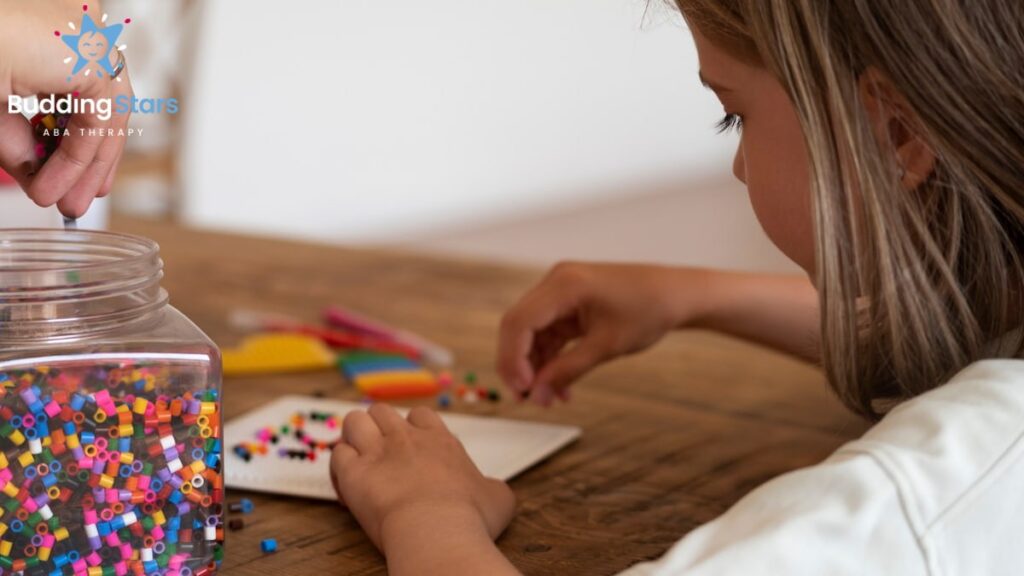
Progress in social skills is often gradual. Small improvements, such as increased eye contact or a single successful peer interaction, are meaningful steps forward. ABA emphasizes data collection to track these changes over time.
Families can support progress by observing and celebrating successes, no matter how small. Positive feedback reinforces effort and builds motivation. Recognizing growth also helps caregivers stay encouraged during challenging periods.
It is important to remember that social development is not linear. Children may progress quickly in some areas and slowly in others. Maintaining realistic expectations and focusing on long term growth helps families stay patient and supportive.
By staying engaged and informed, caregivers play a vital role in helping children build the social skills they need for meaningful participation in everyday life.
FAQs
Can ABA therapy really help my child make friends?
ABA therapy teaches the building blocks of friendship, such as communication, turn taking, and shared play. With consistent practice at home and school, many children become more confident and successful in peer relationships.
How involved do parents need to be in social skills training?
Parental involvement is very important. Practicing skills during daily routines helps children generalize what they learn. Even small, consistent efforts can greatly improve social outcomes over time.
What age is best to start teaching social skills through ABA?
Early support is helpful, but social skills can be taught at any age. ABA programs are adapted to a child’s developmental level, making it effective for young children and older learners alike.
Building Confidence, One Interaction at a Time
Social learning does not happen all at once, and children with autism benefit most from intentional, supportive guidance. Peer interaction ABA programs focus on teaching skills like turn-taking, eye contact, shared play, and appropriate responses through structured and natural activities. Using play skills therapy, children practice social behaviors in ways that feel engaging and natural to everyday life.
Budding Stars ABA designs individualized plans that support social development autism goals at home, in school, and within the community. By breaking skills into manageable steps, Budding Stars ABA helps children feel successful while families gain clarity and encouragement along the way.Contact us to learn how supportive ABA strategies can help your child connect with confidence.