

Key points:
- Practical routines like dressing, eating, and hygiene can be improved through structured, step-by-step teaching rooted in daily practice.
- Communication and decision-making skills strengthen a child’s confidence across home, school, and community settings.
- Parent involvement and consistent support are central to lasting independent living skills in autism outcomes.
For many families, the goal of therapy is not only skill acquisition but real independence in everyday life. Parents want their children to communicate needs, complete daily routines, and participate in community activities with growing confidence. Applied Behavior Analysis, commonly known as ABA therapy, is widely recognized as an evidence-based approach that supports children with autism in building practical skills that translate beyond the therapy setting.
Research from federal health agencies and university-based centers has shown that early, intensive behavioral intervention can lead to meaningful improvements in cognitive, language, and adaptive functioning.
Adaptive functioning refers to daily living abilities such as dressing, eating, and following routines. These are the building blocks of independence. This article explains how ABA therapy promotes autonomy development and autism goals through clear strategies, family partnership, and a focus on real-life application.
Understanding Independence in Autism
Independence is not a single milestone. It is a gradual process of gaining control over daily tasks, communication, and decision-making. For children on the autism spectrum, challenges with language, executive functioning, and sensory processing can affect this process.
National public health data estimates that 1 in 36 children in the United States is identified with autism spectrum disorder. Many of these children benefit from structured teaching that addresses adaptive skills alongside academic learning.
Key areas of independence often include:
- Self-care, such as brushing teeth and bathing
- Household participation, like cleaning up toys
- Social communication in school and community settings
- Safe behavior in public places
- Flexible problem-solving during unexpected changes
ABA therapy focuses on breaking these areas into manageable steps and teaching them through consistent, measurable methods.
Building Strong Foundations Through Functional Skills
At the heart of independence is the development of practical abilities that support daily life. In ABA, these are often referred to as functional skills ABA targets. Functional skills are those that serve a clear purpose in the child’s environment.
For example, instead of practicing naming random objects, a therapist may prioritize requesting a snack, asking for help, or following a morning routine. These skills are directly connected to meaningful participation.
ABA therapy uses techniques such as:
- Task analysis, which breaks complex activities into smaller steps
- Prompting and fading, which provides help and gradually reduces it
- Positive reinforcement, which strengthens successful attempts
- Data tracking, which monitors progress and guides adjustments
When a child learns to put on shoes independently, that success builds momentum. Over time, small achievements connect to larger outcomes like preparing for school without constant reminders.
Supporting Communication for Greater Autonomy
Communication is central to independence. A child who can express needs and preferences is more likely to navigate daily life with confidence. For many families, improving communication is the first step toward autonomy development and autism goals.
ABA therapy addresses communication in multiple ways:
- Teaching spoken language when appropriate
- Using picture exchange systems
- Supporting augmentative and alternative communication devices
- Practicing conversational turn-taking
Federal education guidance emphasizes that communication supports are linked to better academic and social outcomes. When children can ask for help instead of engaging in challenging behavior, family stress often decreases.
Parents can reinforce communication goals at home by:
- Offering choices during daily routines
- Waiting briefly to encourage independent requests
- Responding consistently to communication attempts
- Modeling clear and simple language
These strategies create natural opportunities for practice throughout the day.
Daily Living Routines and Self-Care
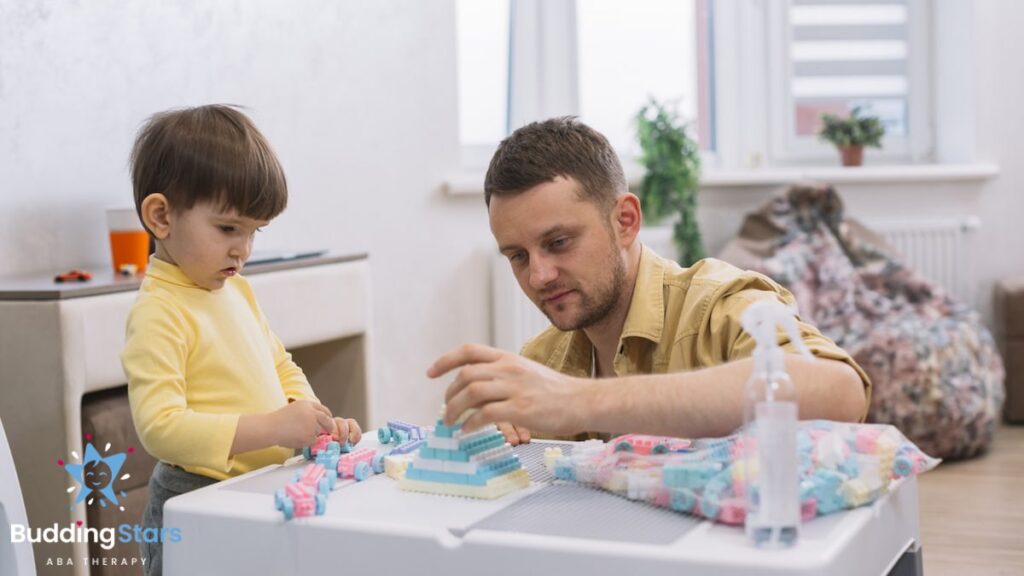
Daily living routines are among the most visible markers of progress. Skills such as dressing, toileting, feeding, and hygiene are central to independent living skills and autism development.
ABA therapy approaches these routines systematically. A morning routine, for instance, may be divided into steps:
- Wake up
- Use the bathroom
- Brush teeth
- Get dressed
- Pack a backpack
Each step is taught with visual support, verbal cues, and gradual fading of assistance. Data is collected to determine which steps require more practice.
Research from university-based autism centers has shown that structured behavioral interventions can improve adaptive behavior scores over time. Adaptive behavior scores reflect real-world abilities, not just test performance.
Families often notice that once one routine becomes consistent, other routines become easier to establish. The predictability reduces anxiety and increases confidence.
Promoting Decision Making and Self Advocacy
Independence includes the ability to make choices and express preferences. Even young children can begin learning to select between options, ask for breaks, or indicate discomfort.
ABA therapy promotes self-advocacy by:
- Teaching children to request a pause when overwhelmed
- Encouraging selection of activities from visual menus
- Reinforcing attempts to communicate feelings
- Practicing simple problem-solving scenarios
As children mature, these skills expand to include planning tasks, managing time, and participating in goal setting. This gradual expansion supports long-term autonomy development and autism outcomes.
Parents play a key role by allowing safe choices within boundaries. For example, offering two clothing options empowers a child to participate in decisions without creating confusion.
Generalization Across Settings
One challenge in skill development is generalization, which means using a skill in different places with different people. A child who can tie his or her shoes during therapy but not at school has not yet achieved full independence.
ABA therapy addresses generalization by:
- Practicing skills in multiple environments
- Involving parents, caregivers, and teachers
- Varying materials and routines
- Gradually reducing structured support
Educational research indicates that skills are more likely to be maintained over time when taught in natural contexts. Practicing ordering food at a community restaurant or greeting a neighbor builds confidence beyond the therapy room.
Families can support generalization by planning community outings where new skills are encouraged in a supportive way.
Reducing Barriers to Independence
Challenging behaviors can interfere with progress toward independent living skills in autism. ABA therapy does not focus on stopping behavior alone. It identifies the purpose behind behavior and teaches alternative skills.
For example, if a child throws objects to avoid a task, the therapy team may teach the child to request a break instead. Over time, the new skill replaces the old behavior.
Steps often include:
- Conducting a functional behavior assessment
- Identifying triggers and patterns
- Teaching replacement communication
- Reinforcing appropriate responses
This approach supports dignity and self-control. As children gain tools to manage frustration, their capacity for independence increases.
Parent Involvement and Consistency
Family participation is one of the strongest predictors of long-term success. Government health agencies emphasize that parent training improves outcomes across developmental domains.
ABA programs often include parent coaching sessions where caregivers learn:
- How to prompt and fade assistance
- How to use reinforcement effectively
- How to track small improvements
- How to respond to challenging situations
Consistency between therapy and home accelerates progress. Parents become confident guides in their child’s growth, rather than passive observers.
Simple strategies such as using visual schedules, maintaining clear expectations, and celebrating small victories can create a supportive home environment.
Preparing for Adolescence and Adulthood
Independence evolves with age. As children approach adolescence, goals may shift toward vocational skills, community navigation, and personal safety.
Older learners may work on:
- Managing money in small transactions
- Using public transportation safely
- Completing household chores independently
- Practicing interview skills
Long-term studies from university-based research centers have found that early behavioral intervention is associated with better adaptive functioning in adolescence. Although outcomes vary, building a foundation of functional skills in ABA in childhood increases opportunities later.
Families can start planning early by discussing long-term goals with their therapy team and identifying meaningful priorities.
Creating a Realistic Path Forward

Every child’s path toward independence is unique. Progress may be steady in some areas and slower in others. What matters is measurable growth that improves quality of life.
When evaluating an ABA program, parents can ask:
- Are goals directly related to daily life?
- Is data shared regularly and clearly explained?
- Are skills practiced in natural settings?
- Is family input included in goal selection?
A strong program aligns therapy targets with family values and real-world demands. The focus remains on empowering the child to participate as fully as possible in daily routines.
Independence is not defined by perfection. It is defined by increasing confidence, self-direction, and participation in meaningful activities. Through consistent teaching, reinforcement, and collaboration, ABA therapy can support children in building the skills that matter most.
FAQs
How long does it take to see progress in independence skills?
Progress varies, though many families notice small improvements within months when therapy is consistent, and goals focus on daily routines.
Can ABA therapy help teenagers build independence?
Yes, programs can target vocational tasks, community safety, and self-advocacy, supporting continued autonomy development and autism growth during adolescence.
What are examples of independent living skills for children with autism?
Examples include dressing, toileting, preparing simple snacks, following schedules, and using communication tools to express needs effectively.
How can parents reinforce functional skills at home?
Practice routines daily, use visual supports, provide clear prompts, and celebrate independent attempts to strengthen functional skills ABA targets.
Is independence possible for every child with autism?
Levels of independence differ, though structured support and consistent practice can improve independent living skills and autism outcomes for many children.
Small Skills Today, Greater Independence Tomorrow
Building independence takes patience and consistency. Functional skills in ABA help children practice everyday routines until they can complete them with minimal assistance. Each mastered task supports autonomy development and strengthens self-confidence.
Budding Stars ABA designs personalized programs that target independent living skills aligned with each child’s age and abilities. Families learn how to reinforce progress beyond therapy sessions.
Connect with Budding Stars ABA to discover how structured ABA programs can support lasting independence and meaningful daily success.