Key Points:
- Early ABA therapy skills cover communication, play, and self-care. They give toddlers the foundation they need for school, friendships, and independence.
- Communication skills in ABA therapy are usually the first thing targeted. Almost every other skill depends on the ability to express and understand language.
- Social skills in ABA for toddlers are taught through play and natural interactions, not boring drills. So they actually transfer to real life.
If your kid is about to start early intervention ABA, you probably have one big question on your mind. What are they actually gonna learn? Fair question. You’re putting in time, energy, and trust. You want to know what that looks like in real life. Good news. Early ABA therapy skills are concrete.
They’re measurable. And they connect directly to your child’s everyday life. This article breaks down the main skill areas covered in early intervention. Why each one matters. And what progress can actually look like.
Understanding this will also help you back up what your child is learning when they’re at home. For a bigger picture of what these programs include, early intervention ABA for infants and preschoolers is worth a read.
Communication Skills in ABA Therapy: The Foundation of Everything
First thing most early intervention programs target. Communication. Not just talking. Any reliable way your kid can express what they need, think, and feel. Communication skills in ABA therapy come first because almost every other skill depends on it. A kid who can communicate can ask for help. Can learn from instruction. Can connect with people.
For some kids, this starts with sounds. Or one word. For others, it might be using a picture exchange system. Or even a simple speech-generating device. The goal is functional communication. Means the child can use whatever system they got to get their needs met in real life. Not just in a therapy room.
Language and behavior are super tied together. When your kid can say what they want, they’re way less likely to cry, hit, or melt down. You can read more about how this works in the article on ABA therapy and language development.
What Communication Goals Look Like
- Requesting things or activities. Words, signs, or pictures all count.
- Labeling stuff. Objects, people, actions.
- Answering yes and no questions.
- Using words to say no, instead of acting out.
- Starting to combine two or more words.
- Answering simple questions about their day.
Social Skills in ABA for Toddlers
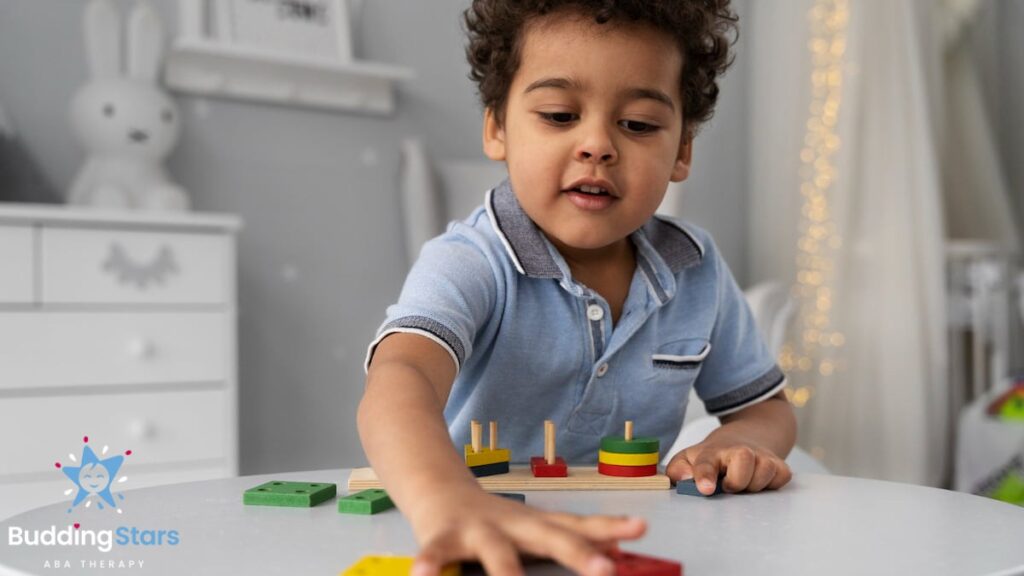
Social development is the second big focus. Social skills in ABA for toddlers get misunderstood a lot. Parents worry that this means forcing their kid to act in some unnatural way. Truth is, early social teaching is really gentle. And it’s built around what the child is already interested in.
For toddlers, social skills start with the basics. Responding to their name. Making eye contact during play. Sharing attention with someone over a cool toy. Tolerating other kids being near them. These are the bricks every friendship gets built on later.
Social Skills Covered in Early Programs
- Respond to their name when you call.
- Joint attention. Following another person’s gaze or pointing.
- Parallel play. Hanging out next to other kids without freaking out.
- Simple turn-taking with games and toys.
- Greeting familiar people. Even just a wave.
- Accepting help from adults during tasks.
Teaching social skills early is huge. Young kids are still naturally curious about other people. Therapists work with that curiosity, not against it. For more on how this transfers to home and school, teaching social skills through ABA therapy at home and school is a solid read.
Early Learning Through ABA: Cognitive and Academic Readiness
Beyond communication and social stuff, early learning through ABA covers the building blocks of being ready for school. Not traditional school subjects. The thinking skills that make learning possible anywhere.
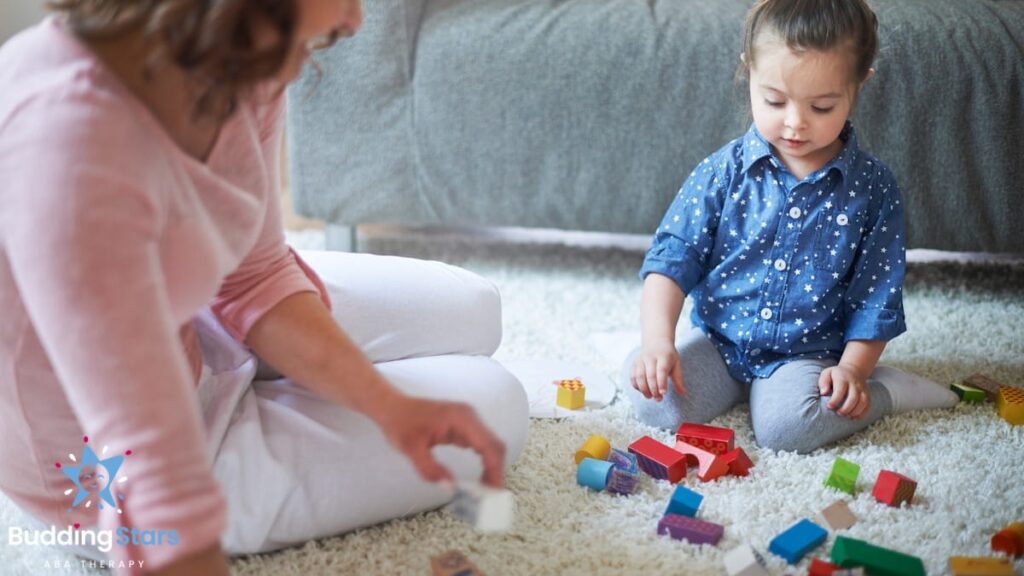
Matching. Sorting. Identifying objects by category. Those are typical early targets. Following multi-step instructions is another. Sitting and paying attention to a task for longer periods. A lot of kids with autism have strong memories but struggle with flexible thinking. These targets work on that directly.
- Matching the same objects and pictures together.
- Sorting stuff by color, size, or category.
- Identifying common objects around them.
- Doing simple puzzles and structured tasks on their own.
- Staying focused on a task for 2 to 5 minutes.
- Following the two-step directions with visual help.
Behavior Skills in Early Intervention
This area scares parents the most. Also, the most misunderstood. Behavior skills in early intervention are not about punishment. Not about forcing kids to obey. It’s about helping kids learn to deal with frustration. Handle changes in routine. Respond to limits without falling apart.
Tantrums and meltdowns in toddlers with autism are usually communication.
The kid doesn’t have the words or tools to say what they need. So behavior fills the gap. ABA teaches replacement behaviors. Means your child learns a better way to send the same message.
Early behavior work also includes teaching kids to wait. Handle changes. Accept no for an answer. Sounds simple. But it’s actually really hard for many kids with autism. Building tolerance for these things early prevents way bigger problems later. You can read more about handling this stuff at home in the article on how ABA therapy helps reduce meltdowns at home.
Toddler Therapy for Autism: Self-Care and Independence
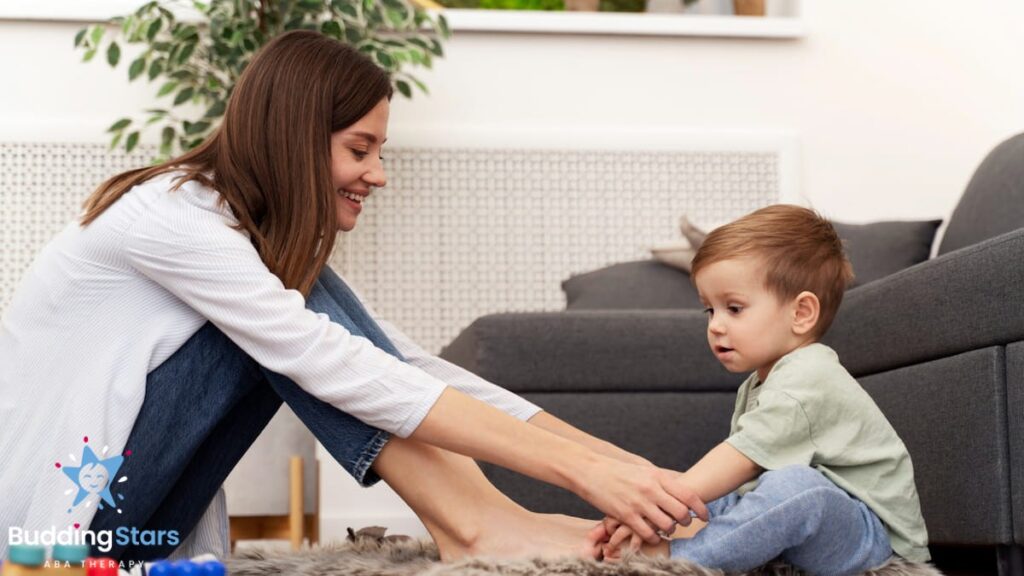
Third big area. Self-care. Toddler therapy for autism always includes helping kids participate in their own daily routines. Eating with utensils. Tolerating teeth brushing. Starting toilet training. Getting dressed with less help. All common targets in early programs.
These skills matter for real, practical reasons. They take pressure off caregivers. They build your child’s sense of being capable. And they get kids ready for preschool and kindergarten. Where some self-sufficiency is expected.
ABA uses something called task analysis for self-care. That means breaking a routine like hand washing into tiny steps. Then, teach each step one at a time. Over time, your kid does more steps on their own. Until the whole routine is done without prompting. For an in-depth look at this, the daily living skills ABA therapy helps children master is a great resource.
Frequently Asked Questions
What’s the most important skill in early ABA therapy?
Functional communication. Almost always. When a kid can express needs, challenging behaviors drop. And every other skill becomes easier to teach.
How are social skills in ABA for toddlers taught without feeling forced?
Therapists embed social moments into stuff the child already loves. If your kid is obsessed with cars, turn-taking gets taught using cars. The skill is built into play. Not stuck on as a separate task.
How long until you see progress in early ABA therapy skills?
Most families see real changes within 3 to 6 months of consistent therapy. Some kids progress faster. Depends on hours, home consistency, and the child’s profile.
Can my child learn academic skills through early ABA?
Yep. Early learning through ABA covers pre-academic targets. Matching, sorting, identifying letters and numbers, and building the attention needed for school later on.
Are behavioral skills in early intervention about punishing bad behavior?
Nope. Behavior skills focus on teaching better ways to communicate and cope. ABA uses positive reinforcement to build new skills. Not a punishment to crush old ones.
Skills Built Early Are Skills Carried Forward
Every skill your kid learns in early intervention is a step toward independence, connection, and confidence. Communication, play, behavior, and self-care. They’re not separate boxes. They build on each other. The earlier you start, the more solid the base.
Budding Stars ABA builds early intervention programs around each child’s unique starting point. Every goal is functional. Measurable. And tied to real life. From morning routines to first friendships.
Contact Budding Stars ABA to learn what a personalized early intervention plan could look like for your kid.