Key points:
- ABA assessment in Maryland takes a close look at your child’s strengths, struggles, and daily patterns to build a plan that fits their unique needs.
- The process blends parent interviews, direct observation, and skill testing, giving the team a clear starting point for therapy goals.
- Results guide every part of treatment, from session length and target skills to how progress gets tracked across weeks and months.
Before therapy can really begin, the team needs to know your child. Not in a general way, but in specific detail. What sets them off, what calms them down, what makes them laugh, what they can do on their own.
An ABA assessment in Maryland is built for exactly this. It is a careful look at where your child stands today across language, behavior, play, and self-help. The findings shape every part of the plan that follows. Sessions get planned around real skills, not guesses. Goals get set based on data, not assumptions.
Parents often leave the assessment with a clearer picture than they have had in years. This guide walks you through how an ABA evaluation works, what it covers, and how to make the most of it from day one.
What an ABA Assessment in Maryland Actually Measures
Assessments cover a wide range of skills. The goal is to find both the strengths your child already has and the areas where teaching will help most. Pediatric ABA evaluation services usually look at communication, social skills, play, daily living tasks, and behavior patterns.
Common areas measured include:
- Receptive language, understanding what others say
- Expressive language, using words or signs to communicate
- Play skills with toys and other children
- Daily living tasks like dressing, eating, and toileting
- Behaviors that get in the way of learning or safety
Each area gets scored or described. The report then ties everything together with recommended goals. Programs often start with daily living priorities and language work first.
Who Runs the Assessment
A Board-Certified Behavior Analyst
Most assessments are led by a behavior analyst with specific ABA training. They have spent years studying how behavior is learned, measured, and changed. Their job is to make sense of what they see and translate it into a plan you can actually use. Our service team includes analysts with experience across age groups and skill levels.
A Collaborative Process
You are part of the team too. The analyst asks for your input every step of the way. Behavior therapy assessment for children works best when parents share what they see at home, since some behaviors only show up in certain settings. ABA therapy guidance for parents and caregivers usually starts during this stage.
How the Assessment Unfolds

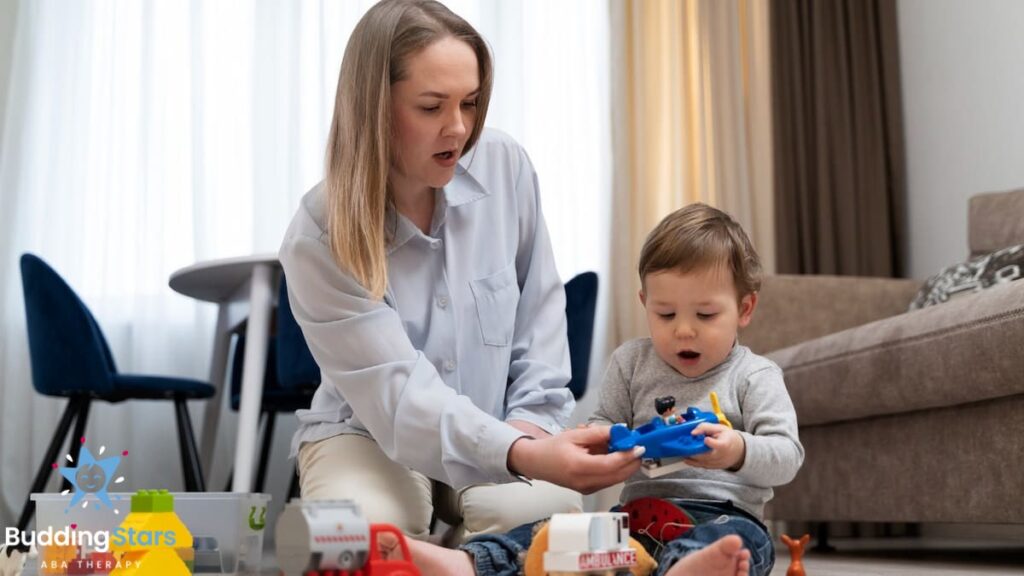
Assessments usually take place across one or two visits. Each visit lasts a couple of hours and includes structured play, observation, and a parent conversation. The team often works in your home, which is why in-home delivery is a common choice. Our in-home ABA evaluation services match the setting to your child’s comfort level. Some children open up more on familiar carpet with familiar toys, and that ease produces better data for the report.
Typical steps include:
- Initial paperwork and intake call
- Direct observation of play and routines
- Skill testing using validated tools
- Parent interview about daily life and concerns
- Written report with recommendations and goals
Some children are tested using formal tools like the VB-MAPP or ABLLS-R. These tools break skills into small steps and show where your child is on each one. Autism skill assessment through ABA uses these to set baseline data.
Why Functional Behavior Matters
Some assessments include a deeper look at behaviors that worry you. Tantrums, hitting, running off, or shutting down all have reasons behind them. A functional behavior assessment digs into those reasons. Once the function is clear, the plan can teach a replacement skill that meets the same need in a safer way.
You can read more about behavior intervention plans to see how this connects to therapy. Early intervention ABA assessment often includes a light version of this work, even for very young children.
What the Final Report Looks Like
Reports usually run several pages. They describe what was observed, what the testing showed, and what the team recommends going forward. Most include a list of specific goals, suggested session hours, and an explanation of how progress will be tracked. Child development assessment for ABA therapy ends with this kind of clear roadmap.
Plans get reviewed regularly. ABA therapy planning after assessment is never a one-and-done. Goals shift as your child masters skills. ABA session outcomes and progress tracking happen during every visit, and the data feeds back into the plan every few weeks.
How Insurance Fits In
Most insurance plans require a formal assessment before approving therapy hours. The report serves as proof of medical necessity. Without it, claims often get denied. Good providers handle this paperwork for you, and our Maryland location and Virginia location teams help with insurance every step of the way. They know which forms each plan needs, and they follow up so you do not have to chase calls.
Approval times vary. Some insurers respond within a week. Others take a month. The team usually keeps you posted on where things stand, and they flag any extra documents the insurer asks for. ABA assessment in Virginia follows the same documentation process to keep approvals smooth across both states.
Making the Most of the Assessment
Be honest. The more you share, the better the plan. If your child melts down at bath time, say so. If they only speak in single words, say so. The team uses every piece of information to shape goals that match real life, and a diagnostic evaluation usually pairs with the assessment for full coverage.
Bring notes. Write down examples from the past week. Bring videos if you have them. A short clip of a tough moment tells the team more than a long description.
Ask questions during the wrap-up. What goals come first? How will I know it is working? What if a skill is not progressing? Good analysts welcome every question. Some parents even start parent training right away to keep the momentum going.
How Assessment Findings Shape Real Therapy Goals

Once the report is done, the team turns findings into a working plan. Goals get written in plain language. Each one targets a specific skill, with measurable steps your child can actually reach. ABA assessment in Maryland is not paperwork for its own sake. It is a working tool that shapes every session for months to come.
Common first goal areas pulled from assessment results:
- Communication and language, often the top priority for young children
- Social interaction with peers, siblings, and adults
- Handling routine changes without falling into long meltdowns
- Self-help and independence across mealtimes, bedtime, and getting dressed
Many families pair the assessment with early intervention services when the child is younger than five. Catching delays early shapes outcomes years down the road, and parents who spot early signs of autism often move into assessment quickly. The report becomes the bridge between worry and a clear plan, and an autism evaluation near you usually moves alongside it.
Frequently Asked Questions
How long does an ABA assessment take?
Most assessments wrap up in one to two weeks from start to finish. Direct contact with your child usually takes about four hours total, spread across visits to keep things manageable.
Will my child be tested like at a doctor’s office?
Not really. Most of the work looks like play. The team uses toys, snacks, and routines your child already knows, so the experience feels familiar rather than clinical.
Do I need a diagnosis before scheduling an assessment?
In most cases, yes. The assessment builds on the diagnostic evaluation and uses that information to set therapy goals. Some providers handle both steps in one visit.
Can siblings be included?
Sometimes. The team may watch sibling play to see how your child shares, takes turns, and communicates with others. It can give helpful information for the plan.
How often will the assessment be redone?
Most insurance plans require reassessment every six months. The team uses these check-ins to update goals, drop mastered skills, and add new targets that match your child’s growth.
Map the Path, Then Walk It With Confidence
Every strong therapy plan starts with a strong assessment. Without that map, sessions wander. With it, every minute counts.
Budding Stars ABA takes the time to know your child before suggesting goals, hours, or strategies. Our team writes reports you can actually read, with recommendations that match how your family lives.
Contact us to schedule an ABA assessment in Maryland that puts your child at the center of every decision. The right starting point makes the rest of the journey a whole lot smoother, and your family deserves that clarity from day one.