

Key Points:
- The hours between ABA therapy sessions are just as important as the sessions themselves, and parents play a huge role in keeping skill-building going every day.
- Reinforcing ABA strategies at home does not require special training or a structured schedule. It fits naturally into meals, play, and everyday routines.
- Consistent follow-through at home helps children with autism generalize skills faster, so what they learn in therapy actually shows up in real life.
Therapy sessions are powerful, but they are only a slice of your child’s day. The hours in between are where the real work of generalization happens, and parents are the ones making it happen. You do not need to run a structured session or turn your living room into a clinic.
What you need is a handful of consistent strategies that fit into the life you already have. This guide covers the most practical ways to support ABA therapy at home between sessions, so your child’s progress keeps moving even when the therapist is not there.
Why Carryover Between Sessions Matters So Much
ABA therapy is built on the science of learning. One of the core principles is that skills need to be practiced repeatedly and in varied contexts before they truly stick. A child who practices requesting something during a therapy session has one good practice. A child who practices it ten times a day at home has a much stronger foundation.
This is what behavior analysts call generalization, and it is one of the hardest parts of teaching children with autism. Skills can be developed in a therapy context, but fail to transfer to real life if they are not practiced in the actual settings where they need to be used. Home practice fills that gap directly.
Research consistently shows that children who receive consistent parent-implemented strategies between sessions make faster progress on goals related to social skills, communication, and daily living skills compared to those who only practice during formal sessions.
Start with What the Therapist Is Already Working On
The most effective home practice is directly connected to what is happening in your child’s current therapy plan. After each session, ask the therapist what was worked on and if there is anything specific to practice before the next visit. Most therapists will give you two or three simple things to try.
This approach keeps everyone aligned. When the child hears the same language, sees the same prompts, and gets the same kind of reinforcement from both the therapist and their parents, the skill builds much faster. Mixing up different approaches at home can actually slow things down, so consistency is key.
If your child has a written behavior intervention plan that includes specific response strategies for challenging behaviors, follow it at home too. The plan works best when everyone uses the same approach.
Using Daily Routines as ABA Practice Opportunities

You do not need to carve out extra time in your day. The routines you are already doing are full of natural teaching moments.
Mealtime
Meals are a goldmine for communication practice. Ask your child to request items instead of just handing them over. Use a simple wait-and-see approach by pausing slightly before giving your child what they want, creating a natural moment for them to communicate. If they are working on language development, name what you are eating, describe what you see, and model short sentences throughout the meal.
Morning and Bedtime Routines
Routines like brushing teeth, getting dressed, and washing hands are perfect for practicing daily living skills that are likely already goals in your child’s ABA plan. Use the same sequence every day, give instructions one step at a time, and offer specific praise when your child completes a step.
Transitions Between Activities
If your child struggles with moving from one activity to another, you can practice the strategies your therapist uses. Give a two-minute warning before a change, use a consistent phrase like ‘time to clean up,’ and follow through calmly even when there is pushback. This kind of consistent approach at home directly reinforces what the therapist is doing to address difficulties with transitions during sessions.
Behavior Reinforcement Techniques Parents Can Use Every Day
You do not have to use a token board or carry around stickers to reinforce your child’s behavior effectively at home. The most powerful reinforcers are often the simplest ones.
- Specific verbal praise: Say exactly what you are praising. ‘You asked using your words’ lands better than a vague ‘Good job.’
- Natural rewards: Let the reward match the behavior. If your child asks to watch a video, letting them watch it is a natural reinforcer for communication. This is the core idea behind natural reinforcement in ABA therapy.
- Access to preferred activities: Completing a non-preferred task earns time with a favorite toy or activity. Keep this simple and immediate.
- Physical affection: For some children, a high five or a hug from a parent is one of the most motivating things there is.
The key is consistency. Whatever you choose to use, use it every time the target behavior happens, especially early on when you are trying to strengthen a new skill. Over time, you can start fading reinforcement as the skill becomes more automatic.
How to Handle Challenging Behavior Between Sessions
One of the hardest things about supporting ABA therapy at home is managing difficult moments without accidentally undoing the progress the therapist is making. Parents often ask whether they should ignore certain behaviors, redirect them, or do something else entirely.
The answer depends on your child’s specific behavior plan. In general, the most important thing is to avoid giving a lot of attention to behaviors that are maintained by attention. Stay calm, keep your voice neutral, and follow through with whatever consequence or redirection the BCBA has recommended.
If your child is regularly showing behaviors like hitting, biting, or throwing things, it is important to handle those moments using the approach outlined in your child’s plan for managing aggressive behaviors. Reacting emotionally or inconsistently can unintentionally reinforce the behavior, even when you are trying hard not to.
After a difficult moment, give yourself a few minutes before trying to re-engage your child. Then move forward without prolonged discussion or consequence. Most ABA approaches emphasize getting back to calm and back to routine as quickly as possible.
Building a Home Environment That Supports Progress
The physical setup of your home can either support or work against your child’s therapy goals. Small changes can make a real difference in how your child behaves and learns throughout the day.
- Use visual schedules to show your child what is happening throughout the day, especially if they have difficulty with changes and unexpected transitions.
- Create a calm-down space your child can go to when they feel overwhelmed, with items that help them self-regulate.
- Reduce access to items that trigger frequent meltdowns by keeping them out of sight or behind a barrier during high-stress times of day.
- Keep consistent expectations across all caregivers in the household so your child gets the same response no matter who is with them.
You do not have to overhaul your whole home. Start with one or two changes and see how your child responds. Small, consistent adjustments tend to have a bigger impact than sweeping changes that are hard to maintain.
Staying Connected with the Therapy Team
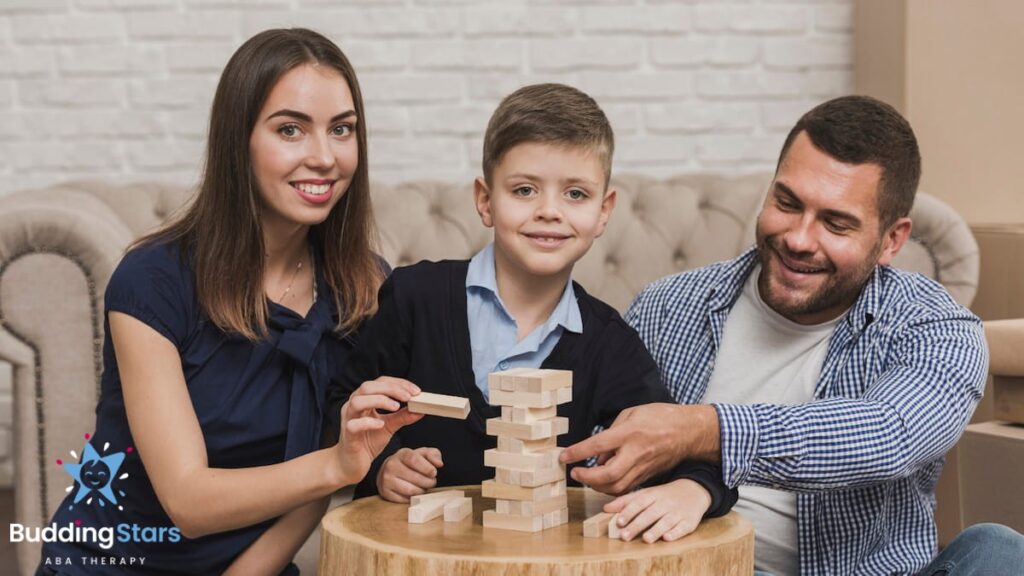
The most effective parents are the ones who stay in close contact with the BCBA and the therapy team. You do not have to wait for a formal meeting to share something you have noticed. If a new behavior is showing up at home, if something is working especially well, or if you are struggling to implement a strategy, communicate that as soon as possible.
The BCBA uses everything you share to make the therapy plan more accurate and more relevant. If your child just started showing an interest in a new topic, that information could be used to create more motivating activities during sessions. If your child is struggling with something specific, like preparing for school, that can become a focus area in the plan.
Parent involvement in ABA therapy is not just about doing things right at home. It is about being an active partner in the whole process. The therapist has expertise in ABA. You have expertise in your child. Together, that combination is what makes the biggest difference.
Frequently Asked Questions
How much time should I spend on ABA home practice each day?
There is no exact number. Most of the practice happens naturally during existing routines. If you are spending fifteen to thirty minutes per day intentionally using the strategies the therapist has given you, that is a strong foundation. More is great if it fits your schedule.
What if I forget what the therapist said to practice?
Ask them to write it down or send a quick note after each session. Many providers use apps or communication logs for exactly this reason. Do not be afraid to ask for a reminder or follow-up.
Can I use ABA strategies with my other children who do not have autism?
Yes. Many ABA strategies, like clear instructions, specific praise, and consistent reinforcement, are effective for all children. Using them consistently across your household actually makes things easier to manage at home.
What do I do if my child refuses to cooperate when I try to practice at home?
Start small and follow your child’s lead. Choose low-stakes moments first, like during a favorite activity. Bring it up with the BCBA so they can help you find a starting point that works and build from there.
Is it possible to do too much ABA practice at home?
It is possible to push too hard, which can cause your child to resist both home practice and therapy sessions. Keep the approach warm and natural, follow your child’s energy level, and communicate with the BCBA if resistance becomes a pattern.
Turn Everyday Moments into Meaningful Progress
The time between sessions holds real potential for growth. Using ABA strategies at home allows families to reinforce what children learn during therapy and build consistency across routines. Simple actions like praise, prompts, and structured play can support lasting behavior change when applied correctly.
Budding Stars ABA helps families understand behavior reinforcement techniques that feel natural and easy to apply. With clear guidance, parents can support skill development through daily activities without adding pressure or complexity.
Reach out to Budding Stars ABA to learn how home practice in ABA therapy can strengthen results, support independence, and keep progress moving forward beyond each session.