
Key Points:
- A typical ABA session at home follows a loose structure that mixes focused skill-building activities with natural, play-based learning moments throughout the visit.
- Every in-home ABA session is guided by a specific plan, but good therapists adapt in real time based on how your child is feeling and responding each day.
- Understanding the ABA therapy routine helps parents stay calm, know what to expect, and reinforce what the therapist is working on between visits.
One of the first questions parents ask after starting in-home ABA services is: What is actually going to happen in my living room for the next three hours? It is a fair question. Knowing the structure helps everyone feel more prepared.
While every child’s session looks a little different, most in-home ABA therapy sessions follow a familiar rhythm. This article walks through that rhythm step by step so you know what to expect from the very first visit.
Before the Session Starts: Setting the Stage
A few minutes before the therapist arrives, it helps to have a comfortable and relatively consistent space ready. This does not mean a perfectly clean house or a dedicated therapy room. It just means having the materials the therapist might use, such as a specific toy, a snack, or a visual schedule, somewhere easy to access.
Therapists often bring their own materials too. Over time, the setup becomes second nature for everyone in the household. Younger children often respond well when they know the therapist is coming, so some families build the session into a visual or verbal schedule for the day.
If your child has a behavior intervention plan in place, the therapist will review it before jumping into the session, even if briefly, to make sure it is aligned with the current priorities.
Phase One: Arrival and Rapport Building
The session does not begin with flashcards or worksheets. It begins with connection. A skilled therapist spends the first few minutes simply following your child’s lead, joining them in whatever they are doing, and letting the child warm up naturally.
This phase matters more than it might look. Children with autism often need more time to shift their attention and energy toward a new person in the room. Rushing past this step can cause the rest of the session to feel like a battle. A therapist who respects this transition period usually gets much better engagement for the rest of the session.
During this warm-up, the therapist is also assessing how the child seems that day. Are they energized or tired? Calm or already escalated? That information shapes what comes next.
Phase Two: Structured Learning Activities
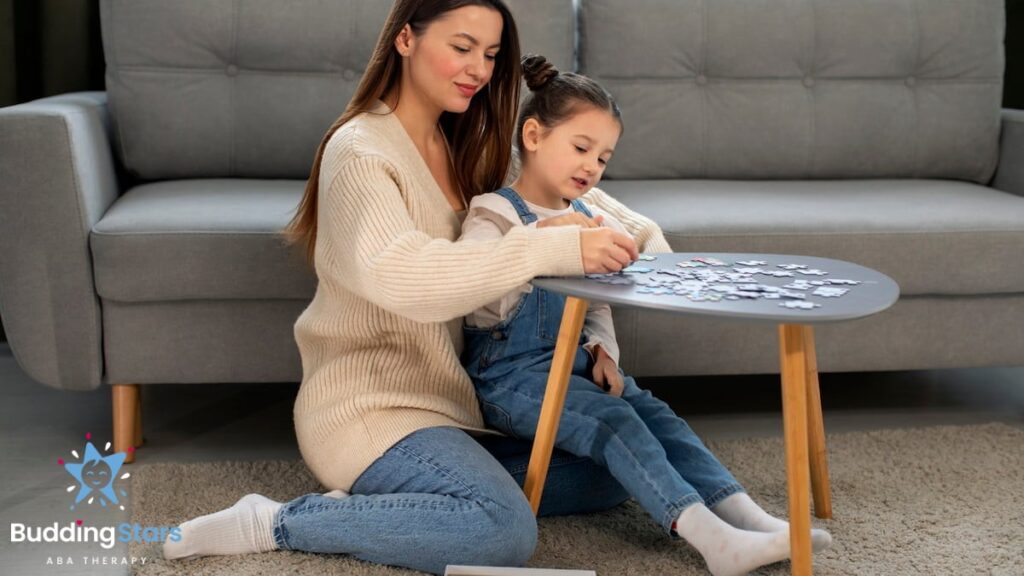
Once the child is engaged, the therapist moves into more structured activities tied to their goals. These might include practicing communication using pictures or words, working on social skills like taking turns or making eye contact, or building self-care routines like hand washing or getting dressed.
Structured activities in a home ABA session often look very different from what you might picture. They are not rigid or robotic. The therapist might sit across from your child at the kitchen table with a simple sorting task, or they might use a favorite toy as a tool for practicing requesting language.
Prompting is a big part of this phase. The therapist guides your child toward the correct response using as little help as needed, then gradually reduces that help as the child gets stronger. This process, called prompt fading, keeps the child challenged without letting them get stuck.
For children working on communication, structured activities often overlap with language development goals, building vocabulary, using sentences, or learning how to initiate a conversation.
Phase Three: Natural Environment Teaching
Woven throughout the session, and sometimes taking up a large portion of it, is something called natural environment teaching, or NET. This is where the therapist takes advantage of what is already happening in your home to teach skills.
If your child runs to the snack cabinet, that is an opportunity to practice requesting. If a sibling walks into the room, that is an opportunity to work on greeting someone. If it is time to clean up toys, that is an opportunity to practice following multi-step instructions.
Natural environment teaching is especially powerful for building independence in everyday life, because the skills are not being learned in isolation. They are being learned exactly where they need to be used.
Many parents are surprised to realize that a session can look like the therapist and child just playing together for a stretch of time. What looks like play is actually highly intentional. The therapist is counting how many times the child initiates, how they respond to requests, and whether they are using the target behaviors from their plan.
Daily ABA Therapy Schedule: A Sample Session Breakdown
Here is what a two-hour home ABA session might look like for a five-year-old working on communication and play skills.
- 0:00 to 0:15, Arrival and warm-up: The therapist arrives and follows the child’s lead, joining them in a preferred activity.
- 0:15 to 0:45, Structured table time: Practicing matching, sorting, and requesting using pictures and words.
- 0:45 to 1:10, Natural environment teaching: Moving to the play area to work on turn-taking and sharing with a sibling.
- 1:10 to 1:30, Snack routine: Practicing requesting, waiting, and simple mealtime behaviors.
- 1:30 to 1:50, Structured play: Using a puzzle or game to work on attention and following two-step instructions.
- 1:50 to 2:00, Wrap-up and parent check-in: The therapist shares what was worked on and what went well.
This schedule shifts based on the child’s energy, the goals for the week, and how the session goes moment to moment.
How Data Collection Works During a Session
You will notice the therapist writing things down or entering data into a tablet throughout the session. This is not just paperwork. It is the way progress is tracked, and decisions are made about the treatment plan.
Every time a skill is practiced, the therapist records how the child responded. Did they complete it independently? Did they need a verbal prompt? Did they need hand-over-hand guidance? This level of detail lets the BCBA see patterns over time and make smart adjustments.
Data-driven decisions are what make ABA therapy different from general support. The plan is not just a feeling or a guess. It is built on real numbers that show what is working and what is not. This is also what drives progress on goals like attention and focus, where small improvements need to be tracked carefully over time.
The End of Session Parent Check-In

Most good ABA providers close each session with a brief conversation between the therapist and the parent. This is not always a long meeting, but it is an important one. The therapist shares what was covered that day, any skills the child did especially well on, and anything parents can practice or watch for before the next session.
This moment is also your time to raise concerns, share what you observed at home during the week, or ask questions about what you are seeing. The therapist will bring that information back to the BCBA so the plan can stay responsive to your child’s actual life.
This parent check-in is the foundation of effective parent training in ABA therapy. When parents understand what happened in the session, they are much better equipped to support their child between visits.
Frequently Asked Questions
How long are typical in-home ABA sessions?
Session lengths vary. Many children have sessions ranging from two to four hours. Some children receive shorter daily sessions, while others have longer sessions a few times per week. The BCBA determines the right length based on the child’s goals and tolerance.
What if my child does not want to participate in the session?
Therapists are trained to manage low motivation. They use preferred activities, reinforcement, and rapport to get the child re-engaged. If a child is consistently refusing sessions, the BCBA will adjust the approach or the environment.
Can parents stay in the room during sessions?
Yes, and often parents are encouraged to observe. Some children do better when parents are nearby but not directly involved, while others are fine with parents in the room. The therapist will guide you on what works best for your child.
What materials does the therapist bring to sessions?
Therapists often bring data sheets, reinforcers like small toys or stickers, and activity materials. Over time, more of the session will use items already in your home to build natural generalization of skills.
How do I know if my child’s session is going well?
Look for consistent engagement, a therapist who adjusts when the child gets frustrated, and clear communication with you at the end. Progress data reviewed regularly by the BCBA is the strongest indicator of whether the therapy is on the right track.
Step Inside a Session, Watch Learning Come to Life
Understanding what happens in ABA therapy can ease a lot of uncertainty. A typical ABA session at home blends structure with flexibility, following a routine that supports both learning and comfort. Activities may include communication practice, play-based learning, and behavior guidance, all adjusted in real time based on the child’s responses.
Budding Stars ABA builds each in-home ABA structure around clear goals, using proven techniques within everyday moments. Sessions feel engaging, not rigid, helping children stay motivated and involved.
Get in touch with Budding Stars ABA to see how a consistent ABA therapy routine can turn daily interactions into opportunities for growth and skill building.