
Key points:
- Early intervention ABA therapy in Maryland before age 5 makes the most of a period when young brains learn fastest and adapt with ease.
- Therapists target language, play, and self-help skills, while parents pick up tools they can use during everyday routines at home.
- Starting early often means fewer setbacks later, as children build confidence, communication, and social skills before school begins.
The first five years of your child’s life are wild. Brains grow, neurons connect, habits form, and personality starts to take shape. That window matters more than parents often realize. Early intervention ABA therapy in Maryland uses that fast-growth period to teach skills that stick for life. Children who start before kindergarten often hit milestones sooner.
They speak earlier. They play with peers more easily. They handle change without falling apart. None of this happens by accident. It comes from steady, structured teaching that fits how young minds work. Families who start early also report less stress at home, because daily routines become easier to manage.
This guide walks you through what early intervention looks like, why timing matters, and what your child can gain from starting now, even if you are just beginning to ask questions.
Why Age Matters in Early Intervention ABA Therapy in Maryland
Young brains are sponges. New connections form every minute. That speed lets children pick up language and behavior patterns faster than older kids or adults. By age five, that pace slows. Skills can still be learned later, but the lift gets heavier.
Starting early means more time for repetition, more chances for skills to spread, and more room for your child to grow before formal school begins. Autism therapy for toddlers takes advantage of this natural window. You can read more about why starting before age 5 matters most in the deeper guide on this topic.
Signs Your Child May Benefit From Starting Now
Communication Delays
If your toddler is not pointing, babbling, or saying single words by 18 months, talk to your provider. Early language gaps respond well to focused teaching, and knowing when to seek ABA can save months of waiting.
Limited Social Interest
Children typically watch faces, share smiles, and reach for caregivers. When a child avoids eye contact, ignores names being called, or seems uninterested in others, early signs of autism may be at play. Early therapy helps build the social bridge.
What Early Intervention ABA Teaches

Programs focus on the skills children need most before school. The goal is not just behavior fixes. It is building the foundation for everything that comes next.
Skill areas often include:
- First words and early language use
- Eye contact and joint attention
- Following simple instructions
- Self-help tasks like dressing and feeding
- Basic play and turn-taking with others
Pediatric ABA programs for young children usually start with two or three targets, then build from there. A full skill list gets covered in our early intervention curriculum overview.
How a Program Gets Built for Your Child
Every plan starts with an early ABA assessment. A behavior analyst spends time watching your child play, listening to your concerns, and reviewing developmental history. From that, they build a plan that targets your child’s specific needs. Early ABA assessment for children is not a test. There are no right or wrong answers. It is a way to map where your child is and where they are heading.
Plans get reviewed every few weeks. Goals shift as skills are mastered. ABA therapy milestones for children are tracked carefully, so you can see exactly what your child has learned. Many families also use in-home delivery to keep sessions in a familiar setting.
What Sessions Look Like for Toddlers
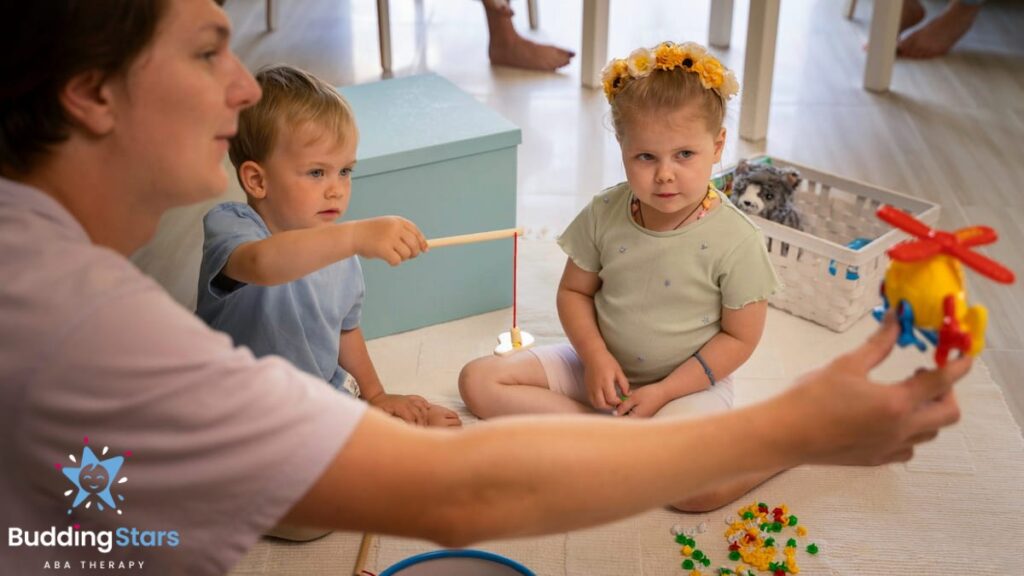
Sessions with little ones look more like play than therapy. The therapist sits on the floor, sings songs, builds towers, and rolls cars across the rug. Every activity has a teaching goal hidden inside it. Snack breaks are part of the plan, and naps get respected too. Toddlers do not work like older kids, and the schedule reflects that.
A toddler might be learning to point. The therapist holds a favorite snack just out of reach. When the child points, they get the snack. Simple, fast, and effective. Skill acquisition through ABA therapy happens in tiny moments like this, repeated many times across a session. Each repetition strengthens the connection between effort and reward in your child’s brain.
Sessions usually run two to three hours, a few times a week. Some children handle longer sessions. Others need shorter, more frequent visits. The therapist matches the rhythm to your child, and your Maryland-based team orVirginia-based team adjusts as your child grows.
Outcomes Families See Over Time
Children who start before age 5 often show big shifts in the first six months. Child behavior therapy using ABA helps reduce tantrums, builds simple requests, and makes daily routines smoother.
Common gains include:
- First words and short phrases
- More flexible play with toys and peers
- Better cooperation during meals and bedtime
- Smoother transitions between activities
- Easier mornings and calmer evenings
ABA therapy outcomes in early intervention also include long-term gains. Children who start young often need less intensive support by elementary school. Some leave therapy entirely. Others continue with lighter sessions focused on advanced goals.
How Parents Stay in the Loop
Early intervention only works when parents are part of it. ABA therapy guidance for families is built into every program. You learn what the therapist is teaching, why it matters, and how to keep it going between visits. Our parent training service supports that work.
Many parents also benefit from reading about how ABA reinforces learning at home. Once you see how small daily choices add up, the work feels less overwhelming.
Skills Early Intervention Tends to Grow Fastest
Some skills bloom faster than others when therapy starts young. Language is the big one. Many toddlers move from no words to short phrases within months of beginning. Early intervention ABA therapy in Maryland uses everyday moments to build language development through play, songs, and snack time. The faster the foundation forms, the easier school transitions become later.
Other areas that often grow quickly in early years:
- Social skills with peers and family, since young children are naturally curious about others
- Sensory regulation through gentle exposure and structured calming routines
- Basic safety skills like stopping at curbs and holding hands in parking lots
- Self-care basics like washing hands, putting on shoes, and using a spoon
Toddler progress often shows in tiny ways first. A child who would only point now uses two words. A child who avoided the swing now climbs on. These shifts matter.
Looking Ahead to School Readiness
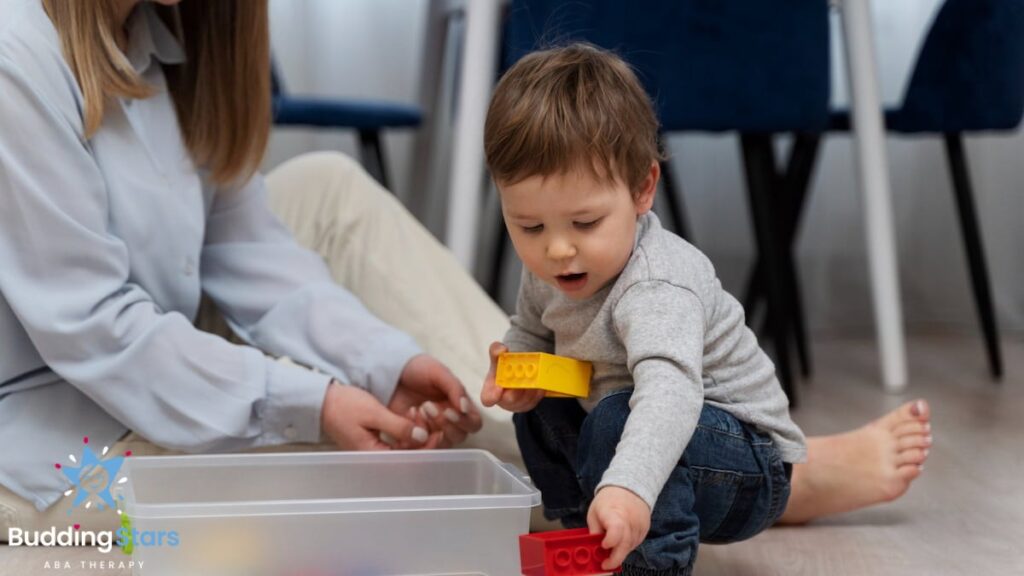
Parents often ask what comes after early intervention. Preparation for school is a natural next step. Many children who start ABA early enter kindergarten with the same level of readiness as their peers. They follow group instructions. They take turns. They sit during circle time. None of these skills appear by accident. They get built one moment at a time, starting at age two or three.
Some families pair early intervention with an autism evaluation closer to home to streamline insurance paperwork. Our complete service list explains how the two fit together. Programs are flexible enough to grow with your child year over year.
Frequently Asked Questions
How early can ABA therapy begin?
Some children start as young as 18 months. The earlier you can begin, the more time your child has to build skills during peak brain growth, but services adapt to fit any age.
Does my child need a diagnosis to start?
Most insurance plans require a formal diagnostic evaluation before starting. The process is usually quick and gives the therapy team a clear roadmap.
How many hours of therapy will my toddler need?
Hours depend on your child. Some need 10 to 15 a week; others need closer to 25. A behavior analyst recommends a schedule based on the assessment results.
Will my child miss out on regular childhood activities?
No. Sessions blend into daily life. Play, snacks, songs, and naps stay part of the routine. Therapy adds structure without taking away the fun parts of being a kid.
What if we wait until kindergarten?
Children can still make progress later, but the work is often harder. Earlier starts mean skills get built before school demands pile on, easing that transition.
Plant the Seeds Now, Watch Them Grow for Years
Your child’s brain will never be more ready to learn than it is right now. Every month you wait is a month that growth window stays open just a little less wide. Budding Stars ABA helps families catch that window with programs that feel gentle, playful, and built around toddlers.
Our team works in your home, on your schedule, with skills you will see take root at the breakfast table.
Get in touch with us to learn how early intervention ABA therapy in Maryland can give your child the head start they deserve. Small steps today, big strides tomorrow.